
Smart Scheduling: Cutting No-Shows in Community Support
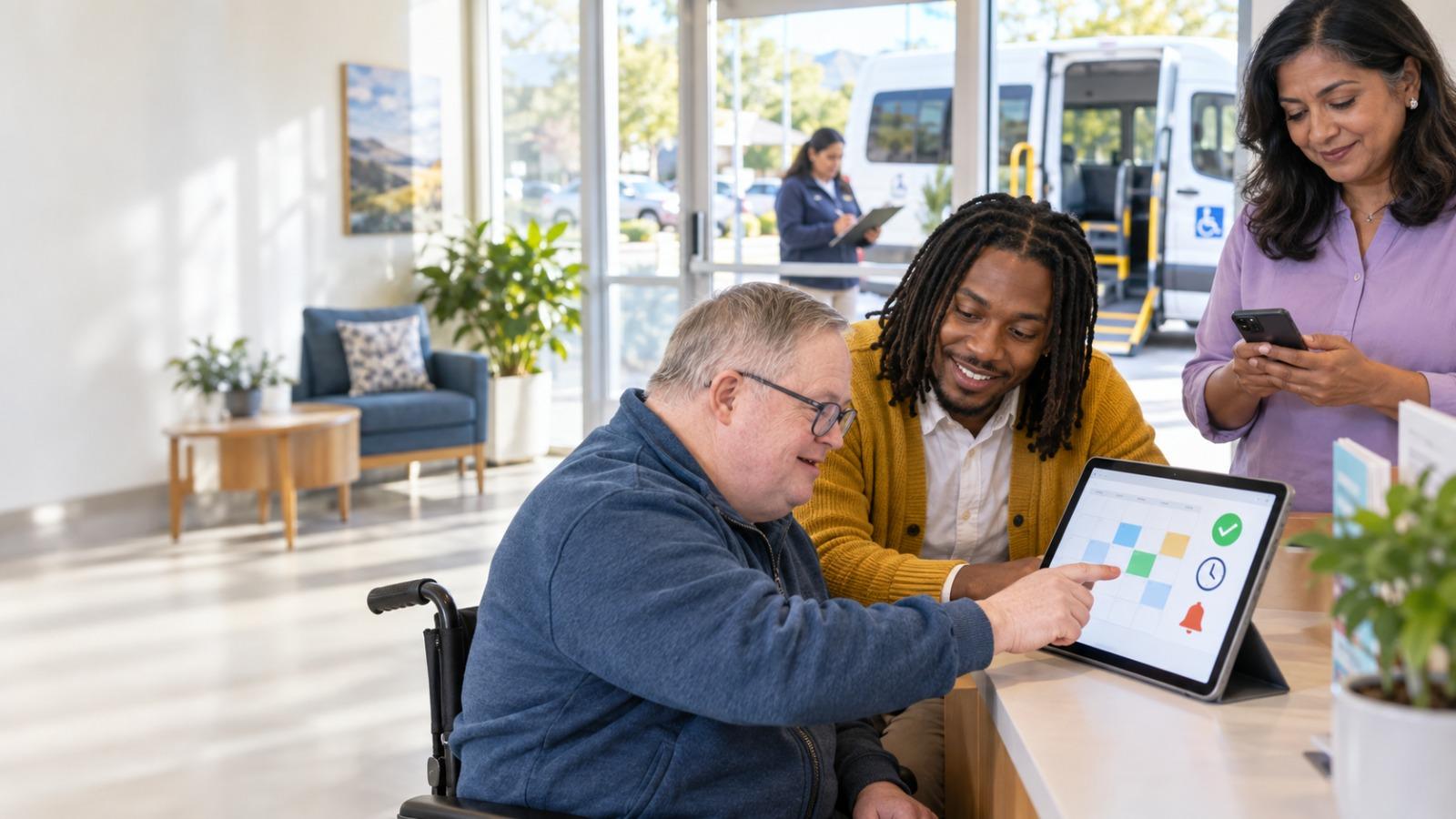
Missed appointments can delay care, waste staff time, and interrupt essential services. For individuals with intellectual and developmental disabilities (IDD), attending an appointment may require coordination among the individual, family, residential staff, day program, transportation team, and healthcare provider.
A no-show is therefore not always caused by forgetfulness. It may reflect transportation problems, staff shortages, communication barriers, anxiety, inaccessible facilities, scheduling conflicts, or missing paperwork.
Smart scheduling helps identify and remove these barriers.
Use Personalized Reminders
Ask how the individual or authorized representative prefers to receive reminders. Options may include:
- Text messages
- Telephone calls
- Email or patient portals
- Written or visual calendars
- Audio reminders
- Notifications to designated caregivers or staff
Record the person’s preferred method, primary and backup contacts, language, accessibility needs, and permission to leave messages.
A practical reminder schedule may include:
- 1Confirmation when the appointment is scheduled
- 2A reminder several days before
- 3A final reminder about 24 hours before
Each reminder should clearly state the date, time, location, arrival time, preparation requirements, and how to confirm, cancel, or reschedule.
Confirm Appointment Readiness
Do not ask only, “Are you coming?” Confirm that the appointment can be completed successfully:
- Is transportation arranged?
- Is the appropriate staff member assigned?
- Is the location accessible?
- Are mobility or sensory accommodations needed?
- Are medication records, referrals, and identification ready?
- Are fasting or other instructions understood?
- Does a guardian or authorized representative need to participate?
This turns a simple reminder into a readiness check.
Coordinate Transportation and Staffing
Transportation planning should begin when the appointment is scheduled—not on the morning of the visit.
Document:
- Assigned driver or transportation provider
- Pickup and return times
- Vehicle-accessibility needs
- Staff or escort responsibilities
- Travel time
- Required medications and health supplies
- Backup transportation arrangements
Assign each responsibility to a specific person. “The residential supervisor will confirm the driver by 3:00 p.m.” is clearer than “Staff will arrange transportation.”
Make Scheduling Accessible
Whenever possible, match appointment times to the individual’s daily routine, energy level, medication schedule, sensory needs, and transportation availability.
Provide communication supports such as plain-language instructions, pictures, large print, audio reminders, translated materials, or visual schedules.
Also make cancellation and rescheduling simple. People are more likely to cancel in advance when they can easily text, call, or request another date.
Track and Respond to No-Shows
Monitor:
- Scheduled and attended appointments
- Cancellations and rescheduled visits
- Missed appointments
- Reminder methods
- Transportation arrangements
- Reasons for nonattendance
- Follow-up actions
Calculate the no-show rate consistently:
Review the data for patterns. If several appointments are missed because transportation cannot arrive early enough, additional reminders will not solve the problem. The transportation plan or appointment time must change.
After a missed appointment:
- 1Confirm the individual is safe.
- 2Identify why the appointment was missed.
- 3Determine whether the need is urgent.
- 4Notify the appropriate team members.
- 5Reschedule promptly.
- 6Address the barrier.
- 7Document the event and follow-up.
The Bottom Line
Reducing no-shows requires more than automated reminders. Effective scheduling combines accessible communication, transportation planning, assigned responsibilities, easy rescheduling, prompt follow-up, and regular data review.
The goal is not to blame individuals for missing appointments. It is to create a coordinated plan that gives every person the best opportunity to receive needed services.